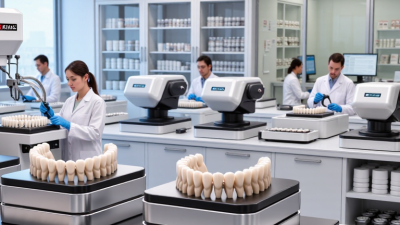
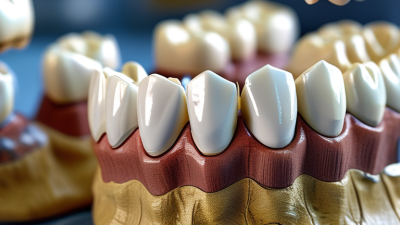
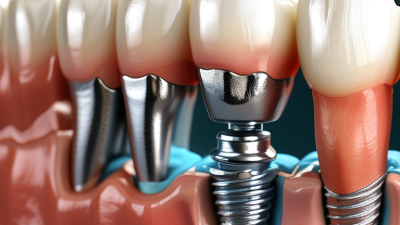
The 2026 dental implant restorations supplier landscape deserves closer attention than a simple price comparison. Clinics need crowns, bridges, abutments, digital workflows, and dependable technical support. The global dental implants market reflects this demand. Grand View Research estimated its value at approximately USD 5.7 billion in 2022, with projected growth through 2030. Fortune Business Insights also reports sustained expansion, although its figures differ because market definitions and product categories vary. That difference matters. Reports are useful, but they are not identical maps.
Carl E. Misch wrote, “The goal of modern dentistry is to return a patient to normal contour, function, comfort, esthetics, speech, and health.” His words remain relevant when evaluating dental implant restorations suppliers in 2026. A strong supplier should provide verified materials, documented manufacturing controls, consistent shade matching, and responsive case planning. Think of a clinician checking a scan margin at 7:00 a.m. A delayed remake can disrupt the patient’s surgery, laboratory schedule, and confidence. Certifications help, but they do not replace clinical communication. Digital compatibility matters too, especially with CAD/CAM systems and open scanning workflows. Not every low-cost option is poor. Not every premium supplier is perfect. Buyers should examine warranty terms, published evidence, delivery performance, and laboratory feedback. Some comparisons still rely heavily on company claims. That is a weakness worth acknowledging. This guide therefore focuses on practical reliability, product quality, restorative versatility, and supplier transparency when identifying leading dental implant restorations suppliers for 2026.
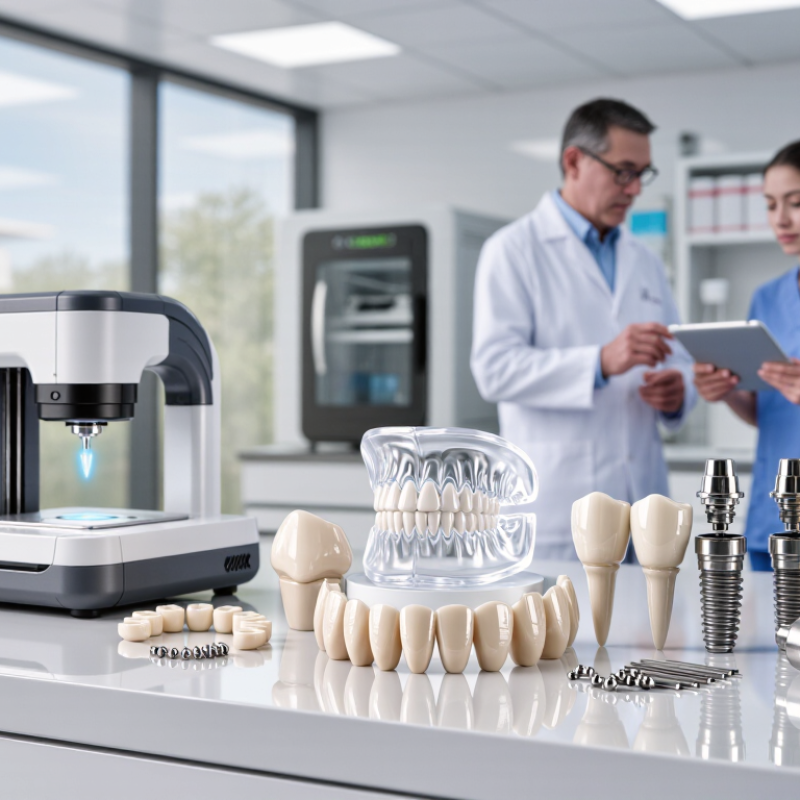
Dental implant restorations are the visible teeth attached to dental implants. They replace a missing crown, bridge, or full arch. The implant supports the restoration beneath the gum line. An abutment connects both parts securely. Together, they restore chewing, speech, and facial balance.
A dentist usually evaluates bone volume, gum health, bite pressure, and cleaning habits. Digital scans can help plan the restoration with greater accuracy. However, technology does not replace clinical judgment. Shade selection also matters. Natural teeth show small variations in color, translucency, and surface texture. A perfectly white crown may look artificial beside neighboring teeth. A useful restoration should fit comfortably, not merely appear attractive.
Material choice depends on location, available space, strength requirements, and personal needs. Ceramic restorations can provide lifelike appearance. Other materials may offer practical durability for heavy chewing areas. The dentist and laboratory technician must communicate clearly about margins, contacts, and bite design. Small errors can cause looseness, food trapping, or unnecessary pressure. The process is precise, but it is not perfectly predictable. Healing changes can affect the final result. Even an experienced team may need adjustments after placement. Regular examinations and careful daily cleaning protect the surrounding tissues and help identify problems early.
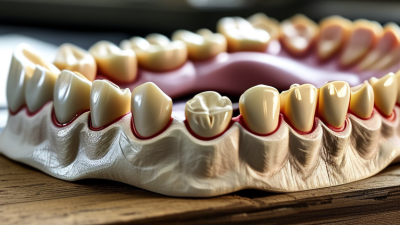
Dental implant restorations are prosthetic teeth or appliances attached to dental implants. The chart shows common implant-support configurations used in clinical treatment planning. These values are representative protocols, not supplier rankings or universal requirements; the final number depends on bone volume, arch anatomy, loading forces, and the treatment plan.
In 2026, dental implant restoration suppliers are divided by the work they perform, not only by product range. Manufacturers produce implant fixtures, abutments, screws, and restorative components for clinical workflows. Their value depends on documented material grades, dimensional consistency, and dependable lot traceability. A low price means little when a screw fit is uncertain. This is where evidence matters.
Certified dental laboratories form another important supplier type. They design and fabricate crowns, bridges, overdentures, and custom abutments from digital or physical impressions. Experienced laboratories should explain scanning requirements, margin limits, shade communication, and remake policies clearly. Ask for sample cases, technician credentials, and turnaround records. One overlooked detail can delay seating. Not every laboratory handles every connection system equally well.
Specialized distributors supply compatible components, instruments, and replacement parts to clinics and laboratories. Some also provide inventory planning, order verification, and technical support after delivery. Education-focused suppliers offer training on restorative planning, torque control, maintenance, and complication prevention. Reliable partners share current instructions, inspection certificates, and responsive contact channels. Still, supplier claims require checking against independent documentation and real clinical experience. I would compare fit, support, and consistency before chasing discounts. That judgment can change after difficult cases.
2026 Top Dental Implant Restorations Suppliers?
How to Evaluate Suppliers in 2026
Choosing a dental restoration supplier requires more than comparing prices. Review manufacturing experience, material traceability, and documented quality procedures. Ask whether each restoration has a clear production record. This should include material batches, design approvals, and final inspection results. Reliable suppliers explain these records without vague promises. That matters.
Check regulatory documentation for every market you serve. Confirm product specifications, safety evidence, and quality certifications directly. Clinical education also deserves attention. A capable supplier should provide practical guidance for occlusion, shade selection, digital scans, and case planning. Their technical team should answer difficult questions clearly. Silence is a warning.
Delivery performance can affect patient schedules and chair time. Request recent data on turnaround times, remakes, damaged shipments, and complaint responses. A supplier may show impressive samples, yet struggle with daily consistency. I have found that small communication delays often reveal larger workflow problems. No evaluation is perfect. Consider a limited trial with several cases before making a long-term decision. Track fit, communication, packaging, documentation, and adjustment time. Then compare the results with your clinic’s actual needs, not a polished sales presentation.
| Evaluation Dimension | Recommended 2026 Benchmark | Evidence to Request | Suggested Weight | Why It Matters |
|---|---|---|---|---|
| Quality management system | Current ISO 13485 certification covering the relevant manufacturing site and product scope. | Valid certificate, audit scope, certificate number, expiry date, and latest surveillance-audit status. | 15% | Demonstrates a controlled medical-device quality system and documented manufacturing processes. |
| Regulatory authorization | Product-specific authorization for each target market, such as FDA clearance or authorization where applicable, and EU MDR conformity assessment when required. | Declaration of conformity, regulatory listing or clearance details, intended-use statement, and post-market surveillance procedure. | 15% | Confirms that the restoration components can be legally supplied and supported in the intended region. |
| Material verification | Implant-grade titanium or zirconia with documented material grade, composition, and biocompatibility evaluation. | Material certificates, lot-specific test reports, supplier declarations, and applicable ISO 10993 biological evaluation records. | 12% | Reduces risks related to contamination, allergic response, mechanical weakness, or material substitution. |
| Mechanical performance | Fatigue and static testing performed using a recognized method such as ISO 14801, with results linked to the specific design. | Complete test reports, loading conditions, sample size, failure criteria, test laboratory details, and design version. | 12% | Helps assess resistance to fatigue, fracture, loosening, and deformation during clinical use. |
| Dimensional accuracy and compatibility | Validated tolerances for implant interfaces, abutments, screws, scan bodies, and CAD/CAM libraries. | Engineering drawings, tolerance reports, inspection records, compatibility matrix, and validated digital-library files. | 10% | Accurate fit supports predictable restorations and lowers chairside adjustment and remake rates. |
| Surface treatment and cleanliness | Documented surface-treatment parameters, cleaning validation, and defined limits for residues and particulate contamination. | Surface-analysis reports, cleaning-validation records, particulate test results, and process-control specifications. | 8% | Supports consistent product performance and reduces risks associated with residues or inadequate processing. |
| Sterilization and packaging | Validated sterilization process where supplied sterile, plus packaging validation consistent with ISO 11607. | Sterilization validation, sterility assurance information, packaging integrity tests, shelf-life data, and transport simulation results. | 8% | Protects product sterility and packaging integrity throughout storage, shipping, and handling. |
| Traceability and recall readiness | Lot or batch traceability from raw material through shipment, with UDI support where required by the destination market. | Traceability procedure, sample labels, UDI records, complaint log process, recall workflow, and retention period. | 7% | Enables rapid investigation, targeted corrective action, and effective customer notification. |
| Production capacity and continuity | Documented capacity, qualified backup processes, continuity planning, and lead-time performance supported by recent records. | Capacity statement, average and worst-case lead times, on-time-delivery data, business-continuity plan, and change-notification policy. | 5% | Reduces disruption risk for clinics, laboratories, distributors, and restoration-production schedules. |
| Technical and clinical support | Accessible technical documentation, trained support personnel, surgical and restorative instructions, and controlled CAD/CAM resources. | Instructions for use, torque specifications, maintenance guidance, training records, response-time commitments, and revision control. | 4% | Improves workflow consistency and helps users apply the components according to validated instructions. |
| Total cost of ownership | Evaluation based on unit price plus shipping, instruments, digital-library access, remake rate, warranty terms, and regulatory-support costs. | Itemized quotation, minimum order quantity, warranty policy, return conditions, shipping terms, and historical remake data. | 4% | Prevents low purchase prices from hiding higher costs caused by remakes, delays, or limited support. |
| Total evaluation weight | 100% | Use a consistent 1–5 score for each dimension and multiply by the assigned weight. | ||
Leading Dental Implant Restoration Suppliers in 2026
The leading dental implant restoration suppliers in 2026 will compete on accuracy, traceability, and clinical support. Restorations include abutments, crowns, bridges, digital workflows, and laboratory finishing. The World Health Organization reported that oral diseases affect nearly 3.5 billion people worldwide. That burden continues to support demand for durable tooth replacement.
Industry forecasts differ, but the direction is clear. Fortune Business Insights estimated the global dental implant market at about USD 4.6 billion in 2023, with continued growth expected through 2032. Suppliers should therefore provide verified material data, documented manufacturing controls, and stable delivery times. ISO 13485 certification can indicate a controlled quality system, although certification alone does not guarantee clinical success.
Look closely at the workflow. A reliable supplier should support accurate scanning, compatible connections, and predictable fit at the chairside. Technical teams should answer quickly when a screw channel is misaligned or a shade needs adjustment. Small details matter. Dentists should also review fatigue testing, sterilization instructions, warranty terms, and complaint records. Market rankings are not perfect. Some reports measure manufacturers, while others include laboratories and distributors. That difference can distort comparisons. Experienced buyers may request sample cases, inspect marginal adaptation, and compare remake rates before selecting a long-term restoration partner.
Selecting a supplier should begin with clinical fit, not a glossy catalog. Review material specifications, implant compatibility, and documented quality controls. Ask how components are traced from production to delivery. Reliable suppliers provide clear certificates, inspection records, and current regulatory documentation. Their technical team should explain tolerances, surface treatments, and restoration limitations in plain language.
Tips: Request sample cases with anonymized laboratory results. Confirm average turnaround times, remake procedures, and shipping safeguards. Ask whether your staff can receive product training. Check how quickly a technical specialist responds when a crown does not seat correctly. A low quote may look attractive. It can become expensive after delays, adjustments, and patient discomfort.
Pay attention to communication during the evaluation. Do they answer difficult questions directly? Do they admit when a case falls outside their recommended use? That honesty matters. A supplier should support consistent workflows, not pressure clinicians into unfamiliar systems. Compare at least three written proposals, then test one controlled case before changing your routine. Even careful teams can overlook small details, such as packaging labels or ordering codes. Review those details with your assistant and restorative laboratory before placing larger orders.