| Material |
Dental zirconia |
Yttria-stabilized tetragonal zirconia polycrystal, including 3Y-TZP and higher-translucency grades |
- High flexural strength compared with many glass-ceramic systems
- Available in different translucency and strength grades
- Requires controlled sintering to achieve the specified final dimensions
|
ISO 6872 for ceramic materials used in dentistry; validated milling and sintering parameters |
Material batch certificate, composition or grade information, sintering profile, inspection report, and lot traceability |
| Material |
Dental cobalt-chromium alloy |
Cobalt-chromium-based alloys for frameworks, copings, partial denture components, and metal-ceramic restorations |
- High corrosion resistance and stiffness
- Suitable for cast, milled, or laser-sintered frameworks
- Surface condition and alloy composition affect bonding and fit
|
ISO 22674 for metallic materials for fixed and removable restorations and appliances; applicable biocompatibility evaluation |
Alloy certificate, chemical composition, manufacturing route, heat-treatment record where applicable, and dimensional inspection data |
| Material |
Titanium and titanium alloys |
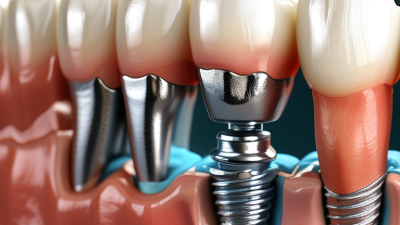
Commercially pure titanium and titanium alloys for implant components, bars, frameworks, and surgical or prosthetic parts |
- High strength-to-weight ratio and corrosion resistance
- Often manufactured by CNC machining or metal additive manufacturing
- Surface finish and cleanliness are critical at implant interfaces
|
Applicable implant, metallic-material, biocompatibility, cleaning, and sterilization requirements; ISO 13485 quality-system control |
Material grade certificate, build or machining record, surface-finish results, cleaning validation, and inspection report |
| Material |
Dental ceramics and glass ceramics |
Leucite-reinforced ceramics, lithium disilicate, feldspathic ceramics, and compatible veneering ceramics |
- Designed for esthetic restorations and controlled optical properties
- Performance depends on processing, crystallization, glazing, and firing conditions
- Shade reproducibility requires calibrated lighting and measurement procedures
|
ISO 6872 for ceramic materials used in dentistry; documented firing and crystallization cycles |
Material certificate, shade or optical specification, firing records, lot number, and final visual or instrumental inspection |
| Material |
Polymeric materials |
PMMA, composite resin, thermoplastic polymers, denture-base materials, and CAD/CAM resin blanks |
- Used for provisionals, denture bases, try-ins, splints, models, and selected definitive applications
- Properties vary by polymer type, degree of conversion, and processing method
- Water absorption, residual monomer, wear, and dimensional stability may require evaluation
|
ISO 20795 for denture base polymers where applicable; ISO 4049 for polymer-based restorative materials where applicable |
Material safety data, technical data sheet, batch certificate, curing or polymerization record, and biocompatibility documentation |
| Technology |
CAD/CAM design |
Digital order intake, dental CAD modeling, nesting, virtual articulation, and automated design-rule checks |
- Supports repeatable digital workflows from scan data to production
- Requires defined minimum thickness, connector, margin, and compensation rules
- File formats commonly include STL, OBJ, and PLY, depending on the workflow
|
Validated software workflow, controlled design libraries, revision control, and documented design acceptance criteria |
Approved design file, software version, manufacturing instructions, revision history, and customer approval record |
| Technology |
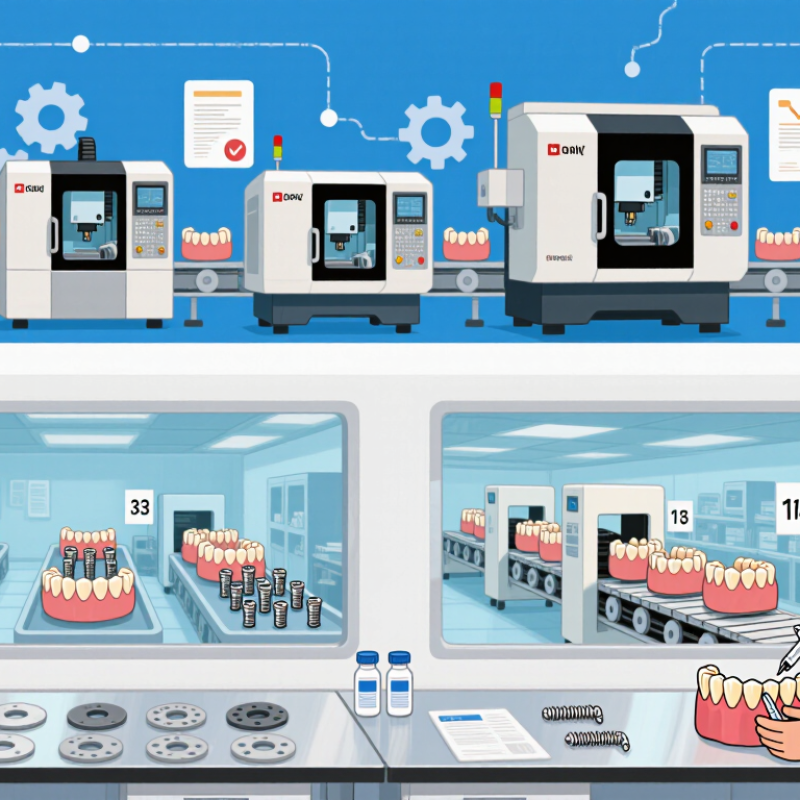
Subtractive manufacturing |
Five-axis CNC milling, precision turning, grinding, polishing, and finishing |
- Suitable for zirconia blanks, titanium, cobalt-chromium, PMMA, and selected glass ceramics
- Dimensional capability depends on machine calibration, tooling, material, geometry, and fixturing
- Tool wear and coolant control can influence surface quality and fit
|
Machine calibration, preventive maintenance, tool-life monitoring, process validation, and final inspection |
Machine calibration records, tool management records, in-process inspection results, and final conformity report |
| Technology |
Metal additive manufacturing |
Laser powder bed fusion for selected cobalt-chromium and titanium dental components |
- Enables complex geometries and efficient framework production
- Part quality depends on powder condition, energy parameters, build orientation, support design, and post-processing
- Stress relief, support removal, machining, and surface treatment may be required
|
Validated build parameters, powder control, equipment qualification, post-processing control, and ISO 13485 documentation |
Powder batch record, build file, machine and parameter log, post-processing record, dimensional report, and material testing where required |
| Technology |
Resin additive manufacturing |
Digital light processing or stereolithography for models, surgical guides, splints, try-ins, and selected appliances |
- Resolution and accuracy depend on layer height, optical calibration, orientation, support strategy, and post-curing
- Medical or dental intended use must match the resin's validated indication
- Cleaning and post-curing are essential for consistent final properties
|
Applicable material standard, validated cleaning and post-curing process, equipment calibration, and biocompatibility assessment |
Resin lot record, printer and parameter log, post-curing record, cleaning validation, intended-use statement, and inspection report |
| Quality |
Dimensional accuracy and fit |
Inspection by calibrated optical scanners, coordinate measuring machines, gauges, or verified digital comparison |
- Acceptance limits should be defined according to the restoration, interface, material, and approved drawing
- Critical areas may include margins, implant interfaces, contacts, occlusal surfaces, and connector dimensions
- Accuracy claims should identify the measurement method and sampling plan
|
ISO 13485 quality controls; ISO 14971 risk-based controls where the product is a medical device; documented measurement-system verification |
Inspection plan, calibrated-equipment certificates, measurement report, nonconformance record, and corrective-action documentation where applicable |
| Quality |
Surface finish and cleanliness |
Polishing, blasting, electropolishing, ultrasonic cleaning, and controlled packaging |
- Surface roughness and residual particles can affect fit, hygiene, wear, bonding, and tissue response
- Implant-contacting and patient-contacting surfaces require clearly defined cleaning controls
- Visual inspection alone may not verify all cleanliness requirements
|
Validated cleaning process, contamination-control procedures, applicable biocompatibility evaluation, and controlled packaging |
Cleaning validation, surface-finish report, particle or residue-control results where required, packaging specification, and release record |
| Safety |
Biocompatibility and chemical safety |
Evaluation of patient-contacting materials, residues, extractables, leachables, and processing by-products |
- Assessment depends on the nature and duration of patient contact
- Material safety cannot be established solely from a supplier declaration
- Finished-product processing may introduce residues not present in the raw material
|
ISO 10993 series as applicable to the contact type and duration; ISO 14971 risk-management principles |
Biological evaluation plan or report, material safety data, chemical characterization where applicable, and risk-management file summary |
| Regulatory |
Quality management system |
Documented controls for design, purchasing, production, inspection, release, complaints, and corrective actions |
- Provides traceability across materials, equipment, operators, software, and finished products
- Supplier qualification and change control are important for cross-border supply
- Quality records should be retained for the period required by the applicable market
|
ISO 13485 is the internationally recognized quality-management standard for medical devices |
Quality certificate scope, audit summary, process map, supplier-control procedure, change-control procedure, and complaint-handling process |
| Regulatory |
Risk management |
Hazard identification, risk estimation, risk control, verification, and production or post-production monitoring |
- Risks may include fracture, incorrect fit, contamination, material mix-up, data error, and inadequate labeling
- Controls should be linked to measurable acceptance criteria
- Risk documentation should reflect the final product and manufacturing process
|
ISO 14971 risk-management framework for medical devices |
Risk-management plan, hazard analysis, FMEA or equivalent assessment, verification evidence, and residual-risk evaluation |
| Global Supply |
Packaging, labeling, and traceability |
Protective packaging, product identification, lot or serial numbering, digital order records, and shipping documentation |
- Packaging should protect the product from deformation, contamination, moisture, and damage during transport
- Labels should identify the product, material, quantity, lot or serial number, and applicable handling information
- Country-specific labeling and import requirements may vary
|
ISO 15223-1 symbols where applicable; ISO 20417 information supplied by the manufacturer where applicable; market-specific regulatory requirements |
Packaging specification, label artwork, packing list, certificate of conformity, lot traceability, and shipping-condition records |
| Buyer Control |
Incoming and final acceptance |
Sample inspection, 100% visual checks for critical features, digital file verification, and certificate review |
- Acceptance criteria should be agreed before production begins
- Critical-to-quality characteristics should have defined inspection methods and sampling levels
- Nonconforming products require segregation, documented disposition, and corrective action where appropriate
|
Approved inspection plan, documented release criteria, measurement-system controls, and nonconformance procedures |
Purchase specification, approved drawing or design file, inspection report, certificate of conformity, and deviation-approval record |